Is Your Running Toilet Costing You More Than Just Water? Uncovering the Hidden Risks
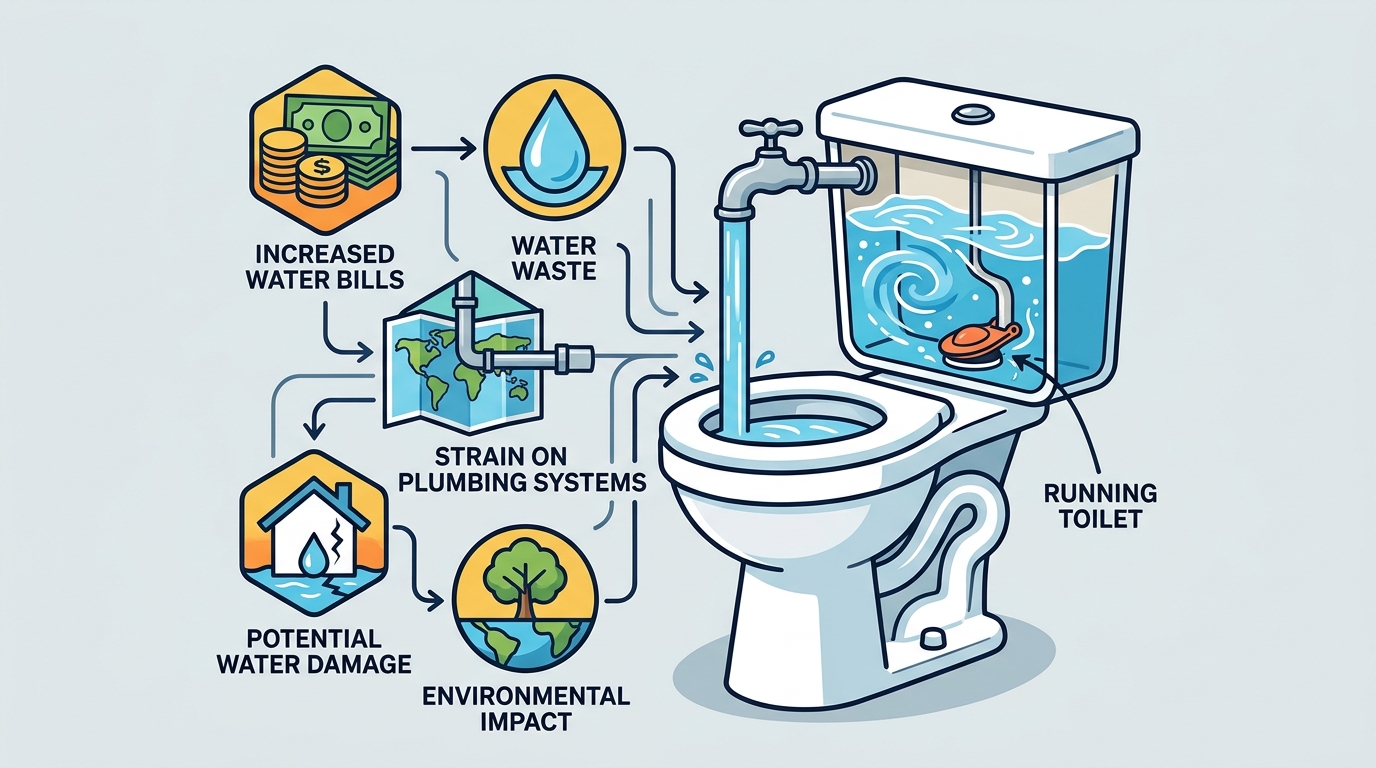
A running toilet may sound like a minor household annoyance, but the steady trickle or repeated refill cycle can point to more than wasted water. Understanding running toilet risks helps homeowners recognize when a simple adjustment is enough, when a worn component needs replacing, and when persistent moisture deserves a closer inspection. The consequences can extend beyond the water bill to include hidden leaks, unnecessary wear on plumbing components, and damage to nearby flooring if water escapes the bowl or tank.
The important distinction is that a toilet that runs internally is not automatically leaking onto the floor. Many running toilets waste water through the flush valve, flapper, or fill mechanism while keeping all the water inside the plumbing system. The financial and structural risks depend on what is failing, how long the problem continues, and whether there are signs of moisture outside the toilet.
Can a Running Toilet Really Cause Problems Beyond a Higher Water Bill?
Yes, although the severity depends on the underlying fault. A toilet that continuously sends clean water from the tank into the bowl can increase water consumption without causing direct structural damage. A separate leak at the tank, supply connection, shutoff valve, or toilet base presents a different risk because water can reach materials that are not designed to remain wet.
There are three main ways the problem can affect a home:
- Financial consequences: Unnecessary water consumption can raise utility charges, and some properties may also incur higher wastewater charges depending on local billing rules.
- Mechanical wear: Repeated filling and cycling can keep the fill valve, flapper, and related components working more frequently than necessary.
- Moisture-related damage: If the fault involves an external leak, water can damage flooring, affect subfloor materials, stain ceilings below, or encourage mold growth where moisture persists.
These outcomes should not be treated as inevitable. A small internal leak may require only an inexpensive replacement part, while a toilet that rocks on its base or leaves water around its footprint may need a more thorough plumbing inspection. Identifying which situation applies is the first step toward avoiding unnecessary repairs.
Why Does a Running Toilet Waste So Much Water?
A conventional toilet tank stores water for the next flush. After flushing, the flapper or another flush-valve seal closes the opening between the tank and bowl. The fill valve then restores the tank's water level and shuts off when filling is complete.
If the seal does not close properly, water can continue escaping from the tank into the bowl. The fill valve may respond by admitting replacement water, creating a cycle that continues for hours or even days. In some cases, the leak is too small to produce an obvious stream, so the toilet sounds normal except for occasional refilling.
Common faults behind continuous running
- Worn or warped flapper: Rubber can deteriorate, lose flexibility, or become coated with mineral deposits. A poor seal allows tank water to seep into the bowl.
- Incorrect chain length: A chain that is too short may prevent the flapper from seating fully. One that is excessively long can catch beneath the seal.
- Misadjusted float: If the float is set too high, the tank may fill beyond its intended level and send water into the overflow tube.
- Faulty fill valve: A valve that fails to shut off can continue admitting water after the tank should be full.
- Damaged flush valve seat: Even a new flapper may not seal reliably if the surface beneath it is damaged or heavily mineralized.
Each fault calls for a slightly different response. If the water level is too high, adjusting the float may solve the issue. If the level drops while the toilet is idle and the fill valve periodically activates, a leaking flush-valve seal is a stronger possibility. If the valve keeps running despite a correctly adjusted float, replacing or servicing the fill valve may be necessary.
These observations narrow down the possibilities, but they are not definitive diagnoses. Some toilet designs use different flush mechanisms, and concealed-cistern systems may require model-specific instructions.
How Much Can a Running Toilet Cost Over Time?
The financial impact depends on the leak rate, the number of days the toilet runs, and the rates charged by the water and wastewater providers. A faint sound does not reliably indicate a trivial leak. Conversely, a toilet that briefly refills once after flushing may be operating normally rather than wasting water continuously.
A useful way to understand the potential expense is to estimate the volume of water lost. If a leak wastes 1 gallon per hour, it uses 24 gallons per day. At that rate, the loss reaches 720 gallons over 30 days and 8,760 gallons over a full year if the problem never stops.
The following examples are illustrative calculations, not measurements of a particular toilet. Actual leak rates vary widely, so use a measured or professionally estimated rate whenever possible.
To estimate the financial effect, multiply the lost volume by your applicable water rate. If your utility bills water in units such as hundreds of cubic feet, convert the estimated gallons into the units used on your bill. Include wastewater charges only if your provider calculates them from metered water consumption or another applicable usage measure.
For example, if a household loses 720 gallons in a month, the additional charge depends on its local tariff and billing structure. A flat-rate account may respond differently from a metered account. This is why a universal dollar estimate would be misleading.
There is also an important exception: not every unexpected increase in a water bill comes from a toilet. Outdoor irrigation, dripping faucets, a leaking water heater, and other plumbing faults can produce similar changes. If the toilet's internal leak test is negative, investigate other likely sources before replacing parts unnecessarily.
Could a Running Toilet Damage Your Floors or Subfloor?
It can, but the mechanism matters. Water moving from the tank into the bowl normally travels through the toilet's designed drainage path. That internal flow generally does not wet the bathroom floor. Structural damage becomes a concern when water escapes from a separate connection, splashes onto surrounding materials repeatedly, or leaks beneath the fixture.
Where moisture-related damage begins
The tank and supply connection: A loose connection, deteriorated washer, cracked fitting, or faulty supply line can release water behind or beside the toilet. Even a slow leak can affect trim, flooring edges, or nearby cabinetry if it remains unnoticed.
The toilet base: Water appearing around the base may indicate a failed wax ring or another seal problem, although spilled water, condensation, and leaks from higher connections can look similar. A damaged seal can allow wastewater to escape during flushing. A toilet that moves when gently touched also deserves attention because movement may compromise the seal.
The flooring and subfloor: Porous materials can absorb water. Repeated exposure may cause swelling, discoloration, soft spots, lifting vinyl, or deterioration of wood-based subflooring. Damage may extend beyond what is visible on the surface.
The ceiling below: In a multistory home, a leak near an upstairs toilet can travel through floor assemblies and appear as a stain, peeling paint, or dripping water on the ceiling below. The location of the stain does not always identify the exact source because water can travel along framing and other surfaces.
Do not assume that every wet toilet base is caused by the running mechanism. A flapper leak and a failed base seal are separate faults that can occur together or independently. Replacing the flapper may stop wasted water without addressing a floor leak, so both symptoms must be evaluated separately.
When Does a Running Toilet Become a Plumbing Wear-and-Tear Problem?
A toilet is designed to handle repeated flushing and refilling. Ordinary use is not a defect, and a properly functioning fill valve is expected to open and close regularly. The concern is prolonged, unnecessary cycling caused by a fault.
When water repeatedly escapes through a faulty seal, the fill valve may activate more frequently to replace it. When the fill valve itself fails to close, it may remain open longer than intended. These conditions can increase operating cycles and make an existing weakness more apparent.
Potentially affected components include:
- Fill valve: A valve that cycles excessively or cannot shut off reliably may require cleaning, adjustment, or replacement.
- Flapper and flush-valve seal: A worn seal can leak continuously, while incorrect installation may prevent even a new component from sealing correctly.
- Float and adjustment mechanism: Incorrect settings can cause overflow into the tank's overflow tube or interfere with normal shutoff.
- Supply connection: Repeated movement during maintenance, corrosion, or an already weakened connection can contribute to leakage, although internal running alone does not automatically damage the supply line.
One common misconception is that every continuously running toilet needs a complete replacement. In many cases, the problem is confined to a serviceable internal component. Replacing an entire toilet solely because the flapper has failed may create unnecessary expense and waste.
The exception is a toilet with a cracked tank or bowl, substantial corrosion in serviceable hardware, recurring structural leakage, or an obsolete mechanism for which suitable parts are unavailable. In those circumstances, a broader repair or replacement assessment may be more sensible than repeatedly repairing one component.
What Should You Check Before Buying Toilet Repair Parts?
A targeted inspection is usually more useful than replacing several parts at once. Toilet repair parts are not universally interchangeable, and a component that appears similar may have a different shape, mounting method, or operating range.
Start with the water level
Remove the tank lid carefully and place it on a stable, protected surface. Observe the water level while the tank is full. If water is entering the overflow tube, the float setting or fill valve may be responsible. If the level is below the overflow but the tank gradually loses water, investigate the flush-valve seal.
For a simple leak test, add a few drops of food coloring to the tank without flushing. Wait approximately 10 to 15 minutes. If colored water appears in the bowl, water is likely passing from the tank into the bowl. This test can help identify a flush-valve leak, but it does not locate an external leak at the toilet base or supply connection.
Match parts to the actual mechanism
Before obtaining replacement components, identify the toilet model if possible. Otherwise, examine the existing part's design, dimensions, attachment method, and compatibility requirements. A conventional flapper, canister seal, flush-valve assembly, and fill valve may perform related functions but are not interchangeable in every toilet.
For research purposes, homeowners may encounter replacement-part listings on Amazon, eBay, and AliExpress. Search phrases such as "toilet flapper replacement," "adjustable toilet fill valve," "flush valve seal," "toilet tank repair kit," "toilet float valve," and "toilet tank bolt gasket" can help identify the type of component being discussed. These phrases describe categories rather than guarantees of compatibility, quality, or suitability for a specific repair.
Regardless of where a part is listed, check the manufacturer's compatibility information and installation instructions. A complete kit may contain more components than the repair requires, while an individual seal may be sufficient for a clearly identified failure. The appropriate choice depends on the diagnosis, not the number of pieces in the package.
When Is a DIY Fix Reasonable, and When Should You Stop?
Simple adjustments are often manageable for homeowners who can safely access the tank and shut off the water. However, the correct approach changes when the problem involves cracked porcelain, corroded connections, concealed plumbing, or evidence of damage beneath the floor.
If the tank is overflowing into its overflow tube, inspect the float setting and fill valve first. Follow the toilet manufacturer's adjustment instructions and confirm that filling stops below the overflow opening at the intended level.
If the tank loses water into the bowl, check the flapper or other flush-valve seal, chain movement, and sealing surface. Replace only the component that is demonstrably worn or incompatible. Test the toilet after the repair rather than assuming that installation alone confirms success.
If water appears on the floor, dry the surrounding area and look for where fresh moisture returns. Check accessible supply connections and the tank-to-bowl area without overtightening fittings. If water reappears at the base, the toilet rocks, or the source remains unclear, arrange a professional inspection.
If the toilet has a cracked tank or bowl, stop using it and arrange appropriate repair or replacement. Porcelain can fail suddenly, and a surface crack should not be treated as a routine flapper problem.
If a leak is affecting a lower ceiling or electrical equipment, prioritize safety and urgent professional assistance. Avoid touching wet electrical fixtures or equipment. If safe to do so, stop the water supply and keep people away from the affected area until it has been assessed.
Warning: Do not overtighten toilet fittings or ignore unexplained water around the base.
Excessive force can crack porcelain or damage plastic threads. A running tank can usually be isolated with its shutoff valve if the valve works correctly, but a corroded or seized valve should not be forced. If the supply cannot be stopped, a connection is spraying water, or moisture is spreading into adjoining rooms, seek prompt plumbing assistance. Do not continue using a toilet that appears unstable or has visibly cracked porcelain.
Practical Checklist: How to Reduce Running Toilet Risks
Use this checklist to distinguish a simple internal leak from a condition that may need more extensive attention.
- Listen for unexpected refilling when nobody has flushed the toilet.
- Check whether the tank water level reaches or enters the overflow tube.
- Perform a food-coloring test to check for water passing from the tank into the bowl.
- Inspect the flapper, flush-valve seal, chain, and float for visible problems.
- Look around the tank, supply connection, shutoff valve, and toilet base for fresh moisture.
- Check whether the toilet rocks or shifts when approached carefully.
- Record the water meter reading when possible, then compare it after a period without water use elsewhere in the home. Follow the utility's instructions for interpreting the meter.
- Identify the toilet model or confirm the dimensions and mechanism before obtaining replacement parts.
- After a repair, flush several times and confirm that the tank refills and stops without repeated cycling.
- Recheck the floor and accessible connections after the repair to confirm that no external leak remains.
If the toilet stops running and the bowl leak test is negative after repair, the immediate water-waste problem may be resolved. If the floor remains wet, the water meter continues moving when all expected water use has stopped, or the toilet repeatedly develops the same fault, investigate further rather than assuming the repair failed for the same reason.
What If the Toilet Runs Only Occasionally?
An occasional refill does not always mean that a toilet is defective. Some toilets may make a brief refill sound after a flush, and certain systems have model-specific operating behaviors. The key is whether the sound corresponds to normal use or occurs without an obvious reason.
If the toilet refills briefly after someone flushes, stops completely, and remains quiet, observe its normal operation before buying parts. If it starts refilling while unused, repeats the cycle at regular intervals, or shows a positive food-coloring test, an internal leak is more likely.
There is also a useful distinction between condensation and leakage. In humid bathrooms, cool tank surfaces can collect moisture from the air. Condensation may appear across a broad section of the tank rather than emerging from a specific fitting. A supply leak, by contrast, often produces a recurring wet point near a connection. Dry the surfaces and observe where moisture returns, while remembering that several sources can coexist.
Likewise, a toilet that runs only during a flush may have a slow or incomplete fill, an adjustment problem, or a mechanism that behaves differently from a conventional gravity-flush toilet. Do not replace a flapper automatically if the actual symptom points to a different mechanism.
Frequently Asked Questions About Running Toilet Risks
1. Can a running toilet increase my water bill even if I cannot see a leak?
Yes. Water can move directly from the tank into the bowl without spilling onto the floor. A worn flapper, faulty flush-valve seal, or fill-valve problem can waste water while the bathroom appears completely dry. A food-coloring test and careful observation can help distinguish this internal loss from an external leak.
2. Can a running toilet cause mold?
A toilet that only leaks internally into the bowl does not automatically create a mold problem. Mold becomes a concern when a separate leak or repeated splashing keeps flooring, drywall, wood, or other materials damp. Find and stop the moisture source, dry affected materials promptly, and seek professional assessment if dampness persists or damage extends beneath the visible surface.
3. Will replacing the flapper always fix a running toilet?
No. A worn flapper is a common cause, but an incorrectly adjusted float, faulty fill valve, damaged flush-valve seat, or incompatible replacement part can produce similar symptoms. If a new flapper does not stop the leak, check whether it fits correctly and seals against an intact surface before replacing additional components.
4. Is it safe to keep using a toilet that runs constantly?
If the issue is confined to internal water flow and the toilet is stable, has no cracks, and shows no external leakage, the immediate physical risk may be limited. However, continued operation wastes water and can conceal a developing fault. Stop using the toilet and seek assistance if the porcelain is cracked, the fixture moves, wastewater escapes, or water is damaging nearby materials.
5. How do I know whether the problem is the fill valve or the flapper?
Observe the tank during filling and after it should have stopped. Water entering the overflow tube may indicate an excessive water level or a fill valve that fails to shut off. A food-coloring test that shows color entering the bowl without flushing points toward a leaking flush-valve seal. These clues are useful but not conclusive for every toilet design.
6. Should I replace the whole toilet if it keeps running?
Usually not as a first step. If the toilet is structurally sound and compatible replacement components are available, repairing the faulty mechanism may be sufficient. Consider replacement when the porcelain is cracked, the fixture has recurring structural problems, parts cannot be obtained, or repeated repairs no longer provide a reliable solution.
7. What should I do if the toilet base is wet but the tank appears normal?
Dry the area and determine whether fresh water returns near the supply line, tank connections, or base. Water at the base can have several causes, including a supply leak, condensation, spills, or a failed toilet seal. If moisture returns during flushing, the toilet rocks, or water appears on the ceiling below, arrange a professional inspection instead of assuming that the running mechanism is responsible.
8. Can I turn off the toilet's water supply overnight?
If the shutoff valve is accessible and operates normally, turning it off can prevent additional water from entering the tank while you arrange a repair. Do not force a stuck or corroded valve. Keep in mind that shutting off the supply does not remove water already present in the tank or resolve a leak from another source, so check the surrounding area for ongoing moisture.
Conclusion: Fix the Cause, Not Just the Sound
A running toilet is a small symptom with several possible consequences, but those consequences are not all the same. An internal flush-valve leak primarily wastes water, while a faulty supply connection or failed base seal can expose building materials to moisture. Excessive cycling can also keep serviceable toilet components operating unnecessarily, although a complete toilet replacement is rarely justified by running water alone.
The most effective response is to follow the evidence. Check the water level, test for a tank-to-bowl leak, inspect accessible fittings, and confirm whether moisture appears outside the fixture. If the problem is a worn seal or an incorrect adjustment, a focused repair may restore normal operation. If water reaches the floor, the toilet becomes unstable, porcelain is damaged, or the source remains uncertain, escalate the investigation rather than relying on repeated part replacements.
Understanding running toilet risks means looking beyond the sound of running water and asking where that water is going, why the mechanism continues operating, and what materials it might be affecting. A careful diagnosis helps limit unnecessary water use, protects the bathroom from avoidable moisture damage, and directs repair efforts toward the component or connection that actually needs attention.


Comments
Post a Comment